Wasp Nest Removal in Aislaby
Wasps repeatedly gathering beneath your roof, around an outbuilding or beside a garden entrance could indicate a nearby nest. CS Pest Busters provides professional wasp nest removal in Aislaby, helping homeowners, landlords and businesses understand the activity and arrange appropriate treatment. We assess the nest location, consider access and explain the next steps before work begins.
Free, no-obligation quotations • Domestic and commercial properties
Local Service
Helping customers across Aislaby and the surrounding Teesside communities.
Assessment-led
Advice and treatment planned around the nest position and property.
Homes and businesses
Support for homeowners, landlords, hospitality and commercial premises.
Wasp treatment suited to your Aislaby property
A nest does not need to be visible to cause difficulties around a property. Wasps may enter through a narrow roofline gap, disappear behind timber cladding or use an opening beneath a shed. The colony can be some distance from the point where insects appear, making it difficult to judge the problem simply by looking at the entrance.
At CS Pest Busters, we provide wasp control in Aislaby based on the activity present and how it affects the people using the building or garden. Tell us whether wasps are near a bedroom window, shared doorway, outdoor seating area or regularly used path. These details help us understand the situation and plan suitable access.
A nest in an undisturbed corner may not require treatment. However, when wasps are repeatedly crossing occupied areas or entering a building, an assessment can establish what action is appropriate. Avoid covering the entrance or moving nearby materials while the colony remains active.
Recognising activity that could indicate a nest
Wasps searching for food may visit several parts of a garden without nesting there. A consistent route to one particular opening is a more useful indication of an established colony.
Repeated flight path
Wasps consistently entering and leaving the same roof edge, vent, crack, hole or patch of ground.
Concentrated activity
More wasps than usual around one loft, shed, outbuilding, bin area or section of garden.
Buzzing in a void
Persistent sound from a ceiling, wall cavity or roof space, especially during warmer daytime conditions.
You do not need to locate the nest yourself before contacting us. Describe what you can see from a safe position, including the entrance height and whether wasps are reaching any indoor rooms.
How we approach a wasp problem
The treatment plan depends on the nest position and the surrounding environment. Our approach considers both the active colony and how the property is used.
Initial assessment
We discuss where the wasps are active, how long the activity has been present and any access or safety concerns. A photograph taken from a safe distance can sometimes help with identification before the visit.
Nest and access check
At the property, the technician considers the likely nest position, flight path and surrounding risks. Children, pets, livestock, food preparation areas and public access are all relevant to the treatment plan.
Targeted treatment
Where treatment is appropriate, a professional-use product may be applied to the nest or its active entrance. Some hidden nests are treated through the entry route because physical removal would be unsafe or would require unnecessary damage to the building.
Aftercare advice
You will be told which area to avoid, what level of residual activity may be expected and when to make contact if activity remains significant. Any proofing should be completed only when the colony is inactive, so wasps are not trapped inside the building.
Hidden and exposed nesting spots around Aislaby
Sheltered spaces can attract nesting wasps in both buildings and gardens. The position of the entrance often determines how the problem can be approached safely.
Roof spaces, tiles and soffits
Wasps can reach a sheltered roof space through small openings around tiles, soffits or fascias. Activity may be visible at the eaves even when the nest is hidden deeper inside. Do not climb a ladder or enter the loft to investigate an active colony. Explain where the insects are entering so access can be assessed before treatment.
Wall cavities, vents and extensions
Openings around vents, pipework and extensions may lead into enclosed spaces suitable for a nest. Sealing an active entrance can redirect wasps towards other routes, potentially including the building interior. We consider the affected wall, adjoining rooms and visible activity before advising how to address the colony.
Sheds, garages and garden areas
Sheds, garages and sheltered garden structures can conceal nests that are only discovered when something is moved. Wasps may also use holes in the ground or nest among vegetation. Stop gardening or maintenance close to concentrated activity, keep pets away and avoid moving stored items to expose the nest.
Are wasps making an entrance or garden difficult to use?
Keep clear of the flight path and leave the opening undisturbed. Contact our team to discuss the location, available access and a free quotation for appropriate treatment.
Local wasp control around Aislaby and Yarm
We help customers in Aislaby with wasp activity affecting houses, rental properties, gardens and business premises. Whether the suspected nest is beneath the main roof or inside a separate outbuilding, let us know which part of the property is affected and how it can be reached.
Our coverage also includes Yarm, Eaglescliffe, Egglescliffe and Longnewton. Customers in these surrounding communities can contact us for advice about the activity they have noticed.
Provide your postcode when requesting a visit, particularly if the property is accessed by a shared drive or is difficult to locate. This helps us confirm coverage and discuss any access arrangements.
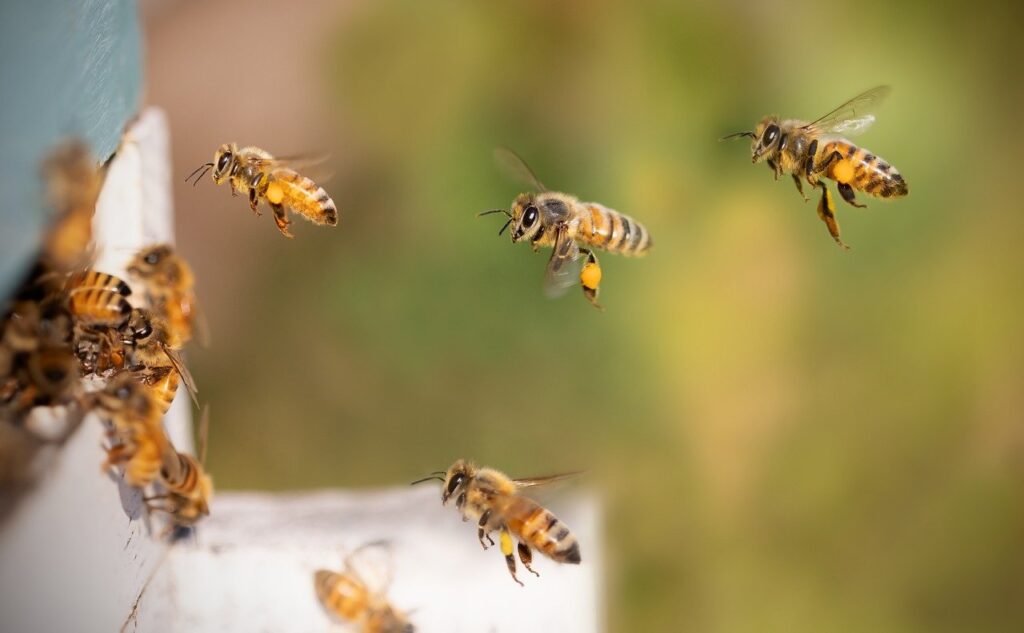
Check the insect before arranging treatment
Insects entering a roof or wall are not necessarily wasps. Honey bees, bumblebees and other insects may use sheltered openings too, and the appropriate response depends on identification. Colour alone can be misleading, especially when the insects are small, moving quickly or high above the ground.
Wasps typically have a more visibly defined waist and smoother appearance than many bees, but a description may not be enough to identify them confidently. If possible, provide a photograph taken without approaching the entrance or interrupting the flight path. There is no need to catch an insect.
A suspected bee colony should be assessed before any treatment is considered. Our wasp and bee information page explains more about identification and why the approach differs.
Wasp control for residential and business properties
Homes, landlords and managing agents
A colony close to a bedroom window, garage door or communal path can interfere with everyday use of a property. We discuss the affected area with homeowners, tenants, landlords or managing agents and explain any access arrangements needed for the visit.
Wasp nests can develop at well-maintained properties. A sheltered opening may provide a suitable nesting place regardless of how clean the house or garden is kept.
Shops, hospitality and workplaces
Wasps around an entrance, outdoor seating space or work area can affect staff and visitors. Tell us about opening hours, food handling areas and any routes that need to remain accessible so these can be considered when planning treatment.
For ongoing business support, explore our commercial pest-control contracts. Food businesses can also find information about our restaurant pest-control service.
Maintaining your property after the colony is inactive
Once the colony is inactive, suitable maintenance may help reduce access to potential nesting spaces. Damaged roofline materials, gaps around service entries and defective vent covers can be checked and repaired where appropriate. Ventilation must remain effective, so avoid simply covering air bricks or other essential openings.
Repair damaged soffits, vents and roofline gaps where appropriate.
Fit suitable insect screening to vents without restricting essential airflow.
Keep outdoor bins closed and clean sugary spillages promptly.
Check lofts, sheds and outbuildings during spring for early activity.
Manage fallen fruit and uncovered food in outdoor seating areas.
If you need assistance with another pest, see our wider pest-control services.
Your Aislaby wasp control questions answered
Answers to common questions about identifying a nest, arranging treatment and using your property afterwards.
Should I book a visit if wasps keep entering beneath the eaves?
Repeated movement beneath the same section of eaves can indicate a nest within the roof structure. You do not need to see the nest itself before asking for advice. Watch only from a safe distance and note the approximate entrance position, whether nearby windows are affected and whether insects have appeared indoors. Avoid using a ladder, lifting tiles or entering the loft to investigate. We can discuss your observations and assess whether a visit is appropriate. A few wasps passing around the roof do not necessarily mean a colony is present, so the repeated pattern is particularly useful.
Can a hidden nest be treated without opening the wall?
In some cases, a concealed colony can be treated through its active entrance without opening the wall or removing surrounding materials. Whether this is suitable depends on the entrance position, access and the likely nest location. Wasp nest removal is often used to describe the service, but treatment of the colony does not always involve physically extracting the nest. The technician will explain the recommended approach and whether any further work may be needed. Do not drill into the cavity or seal the visible gap beforehand, as this can disturb the colony or alter its route.
What should I do if I cannot tell whether they are bees?
Leave the insects and their entrance undisturbed until they have been identified. Bees and wasps can look similar at a distance, and insects using a wall opening should not automatically be treated as a wasp colony. A clear photograph taken safely may help, together with a description of where the activity is occurring. Do not attempt to catch an insect or stand in the flight path to obtain a closer image. If the colony involves bees, the response should reflect the species, location and level of risk, with alternatives to treatment considered where appropriate.
Can I use a shop-bought spray on a nest in my shed?
Approaching an active nest inside a shed can place you close to the colony with limited space to move away. Spraying towards a concealed nest or entrance may disturb the wasps without resolving the problem. Avoid entering the shed to move belongings, knock down the nest or block its access. Keep other people and pets away and explain the situation when you contact us. We can assess the location and discuss appropriate treatment. If you have already applied a product, tell the technician what was used and where it was applied before any further work begins.
When should I contact you about activity after treatment?
Follow the monitoring advice provided during your visit, as the expected reduction in activity depends on the treatment and circumstances. Some movement may continue initially, so seeing a wasp afterwards does not automatically mean the treatment has failed. Keep clear of the entrance and observe only from a safe distance. If activity remains significant beyond the period you were advised to expect, or wasps begin appearing in a different location, contact us and describe what has changed. Avoid applying additional products or sealing the entrance while you are waiting for advice.
Will children and pets need to stay away from the treated area?
Children and pets should be kept away from the active nest and from the treatment area for the period specified by the technician. The necessary precautions depend on the product used, its application and the nest location. Tell us beforehand about play equipment, pet enclosures or other features close to the activity so these can be considered. We will explain any preparation required and when the affected space can be used again. Do not assume that an area is ready to use simply because fewer wasps are visible; follow the aftercare instructions given for your property.
Can you arrange treatment through a landlord or business manager?
We can discuss wasp problems with landlords, managing agents and business contacts as well as homeowners. When arranging the visit, provide the property address, the location of the activity and the details of the person who can grant access. Explain whether the nest affects a shared entrance, occupied rental property or customer area, as this can influence arrangements. Where tenants, staff or other occupants need to receive preparation or aftercare instructions, agree how that information will be passed on. Clear access arrangements help the visit proceed smoothly and ensure the relevant people understand the advice.
“Our company aim is to raise the standards of the Pest Management industry through our bespoke and professional service giving our clients peace of mind whatever the circumstances”
Emergency Call
07725 322700
