Straightforward answers to questions commonly asked by Stockton-on-Tees homeowners, landlords and businesses.
LOCAL WASP CONTROL IN STOCKTON-ON-TEES
Professional Wasp Nest Removal in Stockton-on-Tees
Found a steady stream of wasps around a roofline, loft, wall, shed or garden? CS Pest Busters provides assessment-led wasp nest treatment for homes, landlords and businesses across Stockton-on-Tees. We identify the activity, explain the appropriate treatment and give clear advice about what to do next.
Free, no-obligation quotations • Domestic and commercial properties
Local Service
Covering Stockton-on-Tees and nearby Teesside Communities
Assessment-led
Advice and treatment planned around the nest position and property.
Homes and businesses
Support for homeowners, landlords, hospitality and commercial premises.
Professional local help
Wasp control for properties across Stockton-on-Tees
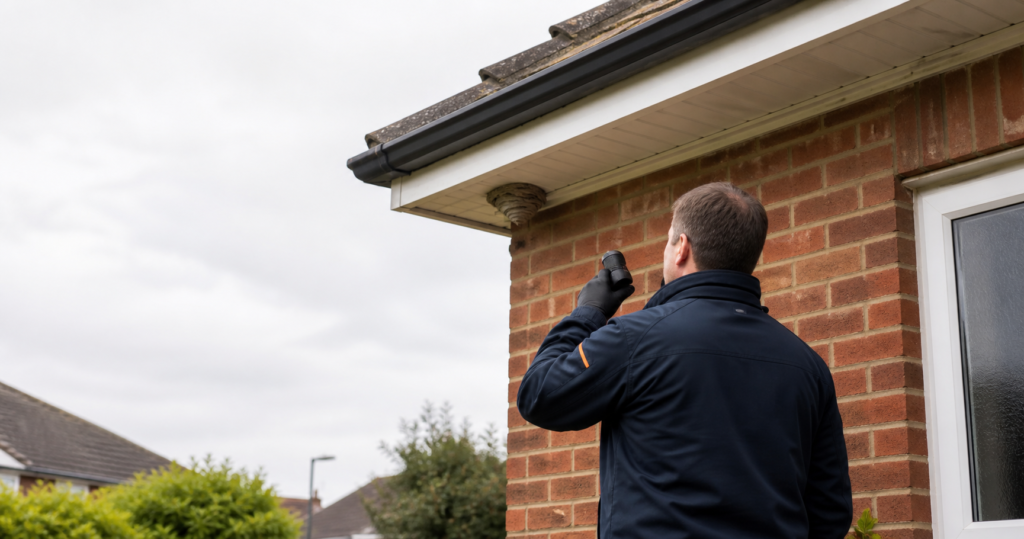
A wasp nest is often first noticed when several insects repeatedly use one small opening. Around Stockton-on-Tees, that might be a gap beneath roof tiles, a soffit, an air brick, a wall cavity, a shed, dense vegetation or an old ground burrow. The visible opening is not always the nest itself, which is one reason it is important not to block the route before the colony has been assessed.
CS Pest Busters provides professional wasp control in Stockton-on-Tees for occupied homes, rental properties and business premises. We ask where the activity has been seen, whether the area can be accessed safely and whether anybody at the property has a known sensitivity to stings. The treatment recommendation then reflects the nest position, the building and the people or animals using the surrounding area.
Some nests can be left alone when they are well away from people and do not create a practical risk. Where activity is close to a doorway, window, loft hatch, play area, customer entrance or working space, professional assessment is the sensible next step.
Signs that a wasp nest may be active
An occasional wasp does not necessarily mean there is a nest on the property. Look for a repeated pattern rather than following individual insects too closely.
Repeated flight path
Wasps consistently entering and leaving the same roof edge, vent, crack, hole or patch of ground.
Concentrated activity
More wasps than usual around one loft, shed, outbuilding, bin area or section of garden.
Buzzing in a void
Persistent sound from a ceiling, wall cavity or roof space, especially during warmer daytime conditions.
A visible papery nest can confirm the problem, but many colonies remain hidden. Do not put your face, hands or a camera close to an entrance. If the flight path crosses a frequently used area, keep people and pets away and contact us for advice.
What happens during professional wasp nest treatment?
The exact method depends on access and risk, but the service normally follows four clear stages.
Initial assessment
We discuss where the wasps are active, how long the activity has been present and any access or safety concerns. A photograph taken from a safe distance can sometimes help with identification before the visit.
Nest and access check
At the property, the technician considers the likely nest position, flight path and surrounding risks. Children, pets, livestock, food preparation areas and public access are all relevant to the treatment plan.
Targeted treatment
Where treatment is appropriate, a professional-use product may be applied to the nest or its active entrance. Some hidden nests are treated through the entry route because physical removal would be unsafe or would require unnecessary damage to the building.
Aftercare advice
You will be told which area to avoid, what level of residual activity may be expected and when to make contact if activity remains significant. Any proofing should be completed only when the colony is inactive, so wasps are not trapped inside the building.
Typical nesting places
Where wasp nests are found around Stockton properties
The visible flight path is often more useful than trying to see the nest itself. These are some of the locations that commonly require careful assessment.
ROOF
Roof spaces, tiles and soffits
A small gap beneath a tile, fascia or soffit can lead into a much larger roof void. Wasps may use a single entrance repeatedly while the nest remains completely hidden. Avoid climbing to investigate or sealing the gap while insects are active; the treatment and any later proofing need to happen in the correct order.
WALL
Wall cavities, vents and extensions
Air bricks, service gaps and junctions around extensions can provide sheltered access. Blocking the only visible opening can cause wasps to search for another route, including towards the inside of the property. A technician will assess the flight path, neighbouring rooms and suitable treatment access before recommending work.
GARDEN
Sheds, garages and garden areas
Nests may develop beneath shed roofs, inside stored items, among dense vegetation or in an old hole in the ground. Keep children and pets away from repeated activity, and do not move surrounding materials in an attempt to expose the colony. Explain the exact location when requesting a quotation so access can be considered.
Found a nest beside an entrance or busy area?
Keep a safe distance and avoid disturbing or blocking the opening. Call for practical advice and a free quotation.
Stockton and nearby areas
Local coverage in and around Stockton-on-Tees
Our Stockton service covers the town centre and surrounding neighbourhoods including Hartburn, Fairfield, Oxbridge, Roseworth, Bishopsgarth, Norton and Portrack. Properties range from flats and terraced homes to detached houses, shops, hospitality venues, warehouses and managed buildings, so access to a nest can vary considerably.
We also cover nearby communities through our dedicated pages for wasp nest removal in Billingham, wasp control in Thornaby-on-Tees, wasp nest treatment in Yarm and wasp nest removal in Middlesbrough.
If you are just outside these areas, contact us with the postcode and a brief description of the activity. We can confirm coverage and discuss the next appropriate step.
Wasps, bees or another insect?
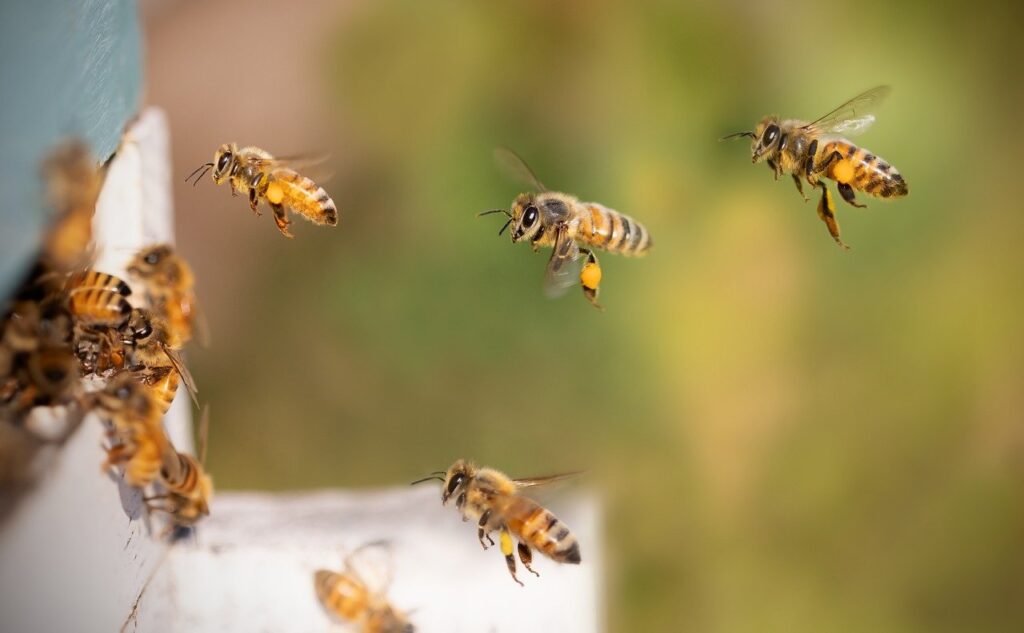
Correct identification matters because bees and wasps should not automatically be treated in the same way. Wasps usually have a smooth, narrow body with distinct yellow and black markings. Honey bees and many solitary bees appear hairier, while bumblebees are larger and more rounded. Appearance alone is not always enough when insects are moving quickly or the entrance is high above ground.
Bees are important pollinators, and treatment should be a last resort where there is a significant and unavoidable risk. Do not block the entrance, spray the insects or disturb a suspected colony. Take a clear photograph from a safe distance if possible and ask for identification first. Our wasp and bee control guide provides further information.
Domestic and commercial wasp control
Homes, landlords and managing agents
Wasp activity may affect lofts, rooflines, extensions, garages, sheds, gardens and shared entrances. We can discuss access with homeowners, tenants, landlords or property managers and explain any preparation needed before the visit.
A clean property can still develop a nest; suitable shelter and an undisturbed entrance are often more relevant than housekeeping.
Shops, hospitality and workplaces
Customer entrances, outdoor seating, loading areas, bin stores and roof voids can all be affected. Tell us about opening hours and sensitive areas so the visit can be planned appropriately.
Businesses needing routine support can view our commercial pest-control contracts. Hospitality operators can also visit our restaurant pest-control service.
Practical aftercare
Reducing the chance of future wasp nests
No property can be made completely wasp-proof, and old nests are not normally reused. New queens can nevertheless choose another sheltered spot nearby in a later season. Once an active colony is no longer present, practical maintenance can make some locations less attractive or accessible:
Repair damaged soffits, vents and roofline gaps where appropriate.
Fit suitable insect screening to vents without restricting essential airflow.
Keep outdoor bins closed and clean sugary spillages promptly.
Check lofts, sheds and outbuildings during spring for early activity.
Manage fallen fruit and uncovered food in outdoor seating areas.
For help with another pest, browse our complete pest-control services.
Wasp nest removal FAQs
Does every wasp nest need to be treated?
No. Wasps play a useful role by feeding on other insects. A nest that is well away from people and does not affect a frequently used area may be left alone. Treatment becomes more appropriate when the flight path or nest position creates a risk around entrances, living spaces, work areas or places used by children and pets.
Do you remove the nest or treat it?
That depends on its position and accessibility. Many active nests are treated at the entrance so returning workers carry the treatment into the colony. Physical removal is not always necessary and may be unsafe or impossible when the nest is inside a wall cavity or roof void. The available options will be explained after assessment.
How can I tell whether I have wasps or bees?
Wasps usually appear smoother and more sharply marked than bees, but identification from a distance can be difficult. Do not block the entrance or spray a suspected bee colony. Send a clear photograph taken from a safe distance or consult our wasp and bee guidance.
Is DIY wasp nest removal safe?
Disturbing an active nest can cause defensive behaviour and multiple stings. Ladders, roof spaces, confined lofts and hidden entrances add further risk. Household sprays may affect individual insects without reaching the colony. Professional assessment is particularly important if the nest is high, concealed or close to a busy area.
How long will wasps remain active after treatment?
Some activity may continue while workers return to the nest. The expected timescale depends on the nest, treatment, access and weather. Follow the technician’s instructions, keep away from the entrance and make contact if significant activity continues beyond the period explained during the visit.
Is treatment safe around children and pets?
Tell us about children, pets, livestock, ponds, food areas and vulnerable occupants before treatment. The technician will assess these factors, select an appropriate method and explain any precautions or temporary access restrictions. Keep everybody away from professional-use products and the active nest area.
Can you help landlords and commercial premises?
Yes. We can discuss one-off wasp callouts for rental properties, managed buildings, shops, hospitality venues, warehouses and other workplaces. For sites needing planned monitoring across multiple pests, ask about our commercial pest-control contracts.
“Our company aim is to raise the standards of the Pest Management industry through our bespoke and professional service giving our clients peace of mind whatever the circumstances”
Emergency Call
07725 322700
